A useful home robot must do more than move, answer questions, or follow a scripted demo. The changes worth watching are the ones that help a machine work safely in a real home, around furniture, pets, children, and people who did not prepare the room for it.
The question behind the excitement is practical: which advances could turn home robots from clever equipment into useful appliances?
- Hands that handle objects: A robot needs to pick up, open, place, and sort items without damaging them.
- Better home maps: Navigation has to work after chairs, bags, and boxes change position.
- Safe shared space: The robot must slow down, stop, and recover when a person enters its path.
Mobile manipulation
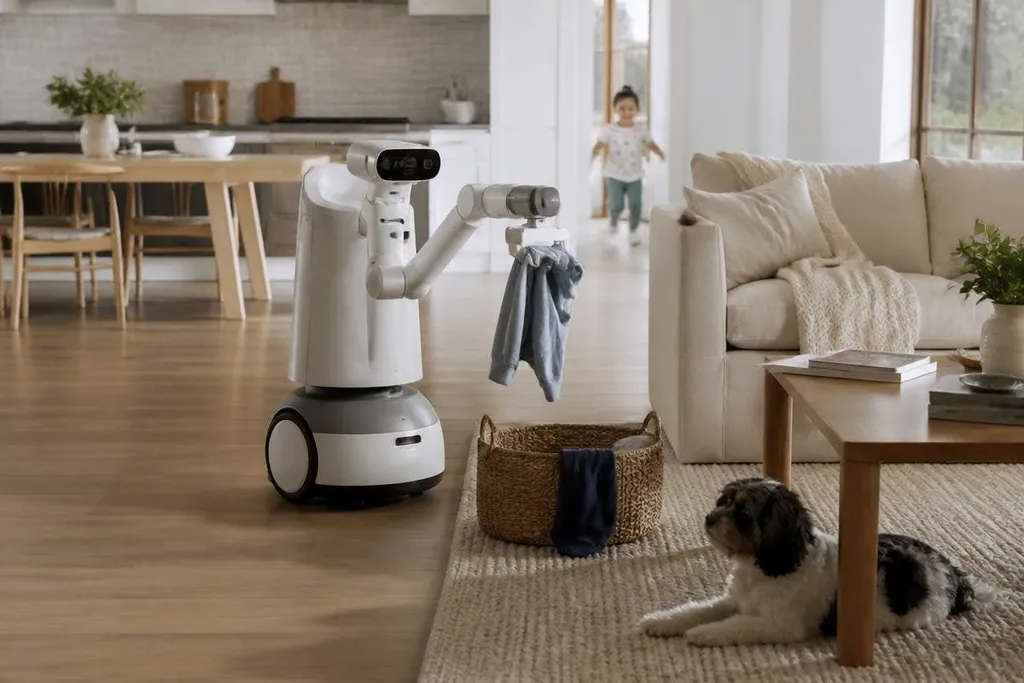
A robot that can move through a house has limited value if it cannot affect anything around it. Mobile manipulation combines a moving base with an arm, gripper, or other end effector, which is the part that touches the object.
The useful test is not whether the robot can lift one object. It is whether the robot can find the object, choose a safe grip, carry it across uneven space, and place it where it belongs. A cup, towel, charging cable, and soft package all need different handling.
This work also exposes a basic limit. Household objects have no fixed shape or position, so a robot needs vision, force sensing, and software that can recover from a poor grip. A scripted arm movement does not prove that the full task works.
Robots that understand a home
Home navigation needs more than a map of walls. The robot has to identify doors, tables, stairs, people, and objects left on the floor.
LiDAR measures distance with laser pulses, while cameras add information about color and shape. Each sensor has gaps, so the robot needs several sources of information before it moves.
The useful change will be a robot that can update its map after the room changes. A chair in a new place should become a new obstacle, not a reason to stop or push through. The same system should know when an object is too small, too soft, or too risky to move.
A home robot earns trust when its voice commands and task plans hold up after the room changes. For that test, home robotics reporting from Robot24 can connect a claim to a named robot, a test date, and the task shown.
Voice, vision, and task planning
Speech can make a robot easier to control, but voice alone does not solve household work. “Put the laundry away” leaves several details open: which room, which items, and where each item belongs.
A useful system needs to ask when the instruction is unclear, remember the answer, and keep track of the task while conditions change. It also needs a clear stop command. A person should know what the robot heard and what action it plans to take before the arm starts moving.
The open issue is reliability over time. A single successful exchange says little about how the system handles noise, unfamiliar words, a blocked route, or an object that is missing.
Safety and failure recovery
Safety may be the least visible area of progress, yet it will decide whether home robots can work near people. The robot needs collision sensing, limited force, safe motor behavior, and a physical emergency stop that a person can reach quickly.
Recovery matters just as much. A robot that stops safely after losing sight of an object is more useful than one that keeps acting on an old guess. The system should report the failure in plain language and wait for a person when it cannot judge the next move.
I’d skip any home robot that hides its failure cases behind polished demo clips. Buyers need to see the stop behavior, the recovery steps, and the limits on what the robot may touch.
A buyer’s check before the next demo
Use this short guide when a company presents a home robot or asks for a deposit:
- Name the task: Ask for one complete household job, from the first instruction to the final placement.
- Change the room: Move an ordinary object and see whether the robot updates its route.
- Test a bad grip: Check what happens when the robot misses, slips, or meets a soft item.
- Check the stop: Find the emergency stop and watch how the robot behaves after activation.
- Ask about limits: Look for clear rules about stairs, pets, water, heat, and sharp objects.
- Price the whole setup: Include the robot, software fees, repairs, charging equipment, and human help.
The biggest home robot advances will show up in these details: a safer handoff, a map that changes correctly, or a task that finishes without a hidden operator. Until companies publish that evidence, the most useful breakthrough to watch is the one that works in an ordinary room.